

Most Hollywood memoirs regale us with glamorous premieres, outrageous characters we can't possibly believe are real, and shocking tales of debauchery. Peter M. Hoffman's Karmic Winds: Reflections from the "Smartest Guy in Hollywood" is none of these things. Instead of wallowing in celebrity or airing long-held grievances, Hoffman delivers an unusually self-searching reflection on ambition, ethics, success, failure and atonement. It's part Hollywood memoir, part legal thriller, part philosophical autobiography and all heart-felt spiritual journey.
Reviewed by Allan R. Ellenberger

Published by Rare Bird Books in 2026, the 288-page hardcover focuses as much on the inner life as on the entertainment industry. The title hints at its central theme: invisible forces shaping our lives, carrying us toward triumph or tragedy like unpredictable winds altering a ship's course.
Hoffman is hardly an ordinary Hollywood executive. A graduate of Yale Law School, former clerk to Chief Judge David L. Bazelon of the United States Court of Appeals, and one-time tax attorney to entertainment clients, he eventually became president of Carolco Pictures during one of the studio's most successful eras. Along the way, he worked with figures including Alex and Ilya Salkind, Menachem Golan, Yoram Globus, Harvey and Bob Weinstein, and many others who helped define independent filmmaking during the 1980s and 1990s. Readers fascinated by the business side of Hollywood will find no shortage of fascinating material.
But Hoffman avoids telling an orthodox look-behind-the-curtain memoir. He begins not with a movie premiere in Hollywood but with his arrival at the Federal Correctional Institution on Terminal Island following his conviction in what he has steadfastly maintained was a case of prosecutorial overreach and legal injustice, stemming from a Louisiana film tax credit scam. Rather than letting prison serve simply as the launching point for another tale of innocence, Hoffman lets it serve as the provocation for exploring his whole life.
It's that decision that gives Karmic Winds its power. Prison transforms from a physical place to a place in one's mind. Prompted by an old friend to write something, Hoffman starts his "life review," taking from Buddhist ideology, Christian belief, philosophy, literature and forty years of living. His memoir tries to figure out why things happened to him, not just what happened.
The early chapters are among the book's strongest. Hoffman recounts growing up in an intellectually gifted but emotionally complicated family. His father, disabled by polio but determined to excel professionally, becomes a lasting model of perseverance. His mother's departure during childhood leaves emotional scars that Hoffman neither exaggerates nor minimizes. Rather than assigning blame, he seeks understanding, a quality that permeates much of the memoir.
His time at Drew University and Yale Law School showcases an astonishingly inquisitive intellect. Hoffman fondly describes professors who inspired him outside of the curriculum and remembers classmates who would go on to become household names, such as Clarence Thomas and John Bolton. These parts of the book are enjoyable because Hoffman never uses name-dropping as a crutch. Each story advances his larger inquiry into character, justice and the development of the mind.
Hollywood enters gradually rather than explosively. Hoffman's transition from elite tax attorney to entertainment executive unfolds naturally through his work with musicians, filmmakers, and producers. His stories about legendary music manager Albert Grossman, Bob Dylan's publishing arrangements, and the complex financial realities of the recording industry show his ability to explain sophisticated legal and business concepts in language general readers can understand.
The Carolco years feature some of the memoir's most intriguing pages. Hoffman pulls back the curtain on movie financing and production. He provides rare insight into how independent studios put together films that could rival the products of the major Hollywood studios. Eschewing celebrity gossip, he describes the complex interplay between creativity, financing, distribution and risk. If you are curious about how the sausage gets made, these chapters are well worth your time.
Unlike many memoirs by entertainment figures, Karmic Winds isn't afraid to reveal Hoffman's flaws. He freely admits errors in judgment, misplaced bravado, dashed expectations and doors closed on him. Yes, there's anger---especially over his criminal conviction---but very little bile. Hoffman frequently circles back to issues of culpability, redemption and maturity. You may not necessarily agree with his take on the legal matter at hand, but you have to admire the soul-searching honesty he brings to it.
The spiritual aspect of Hoffman's life story may take readers aback who pick up this book anticipating a typical Hollywood tell-all. Hoffman readily invokes Friedrich Nietzsche in the same sentence as the Gospel of John. He quotes Rainer Maria Rilke and Herman Hesse. He writes about the Buddhist stages of the bardo.

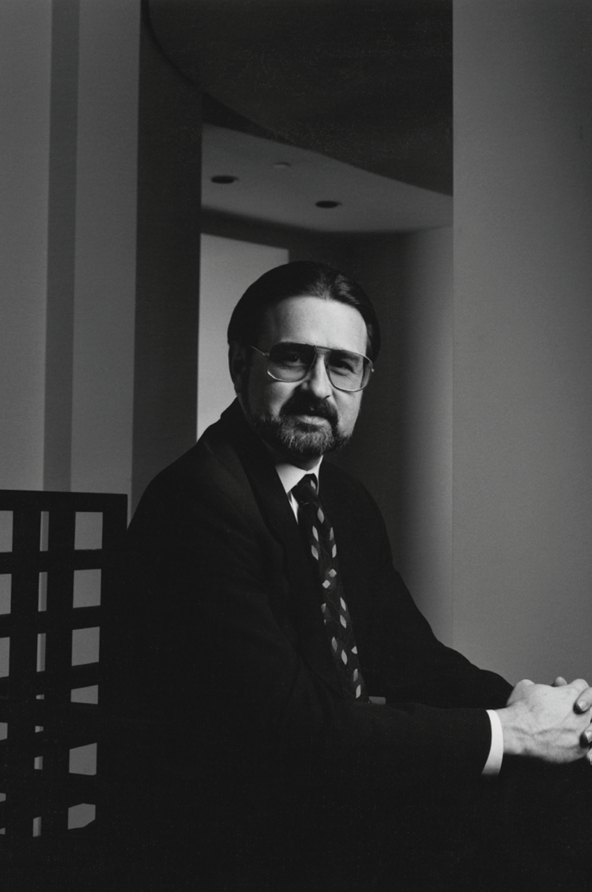
Corporate publicity portrait of Peter M. Hoffman, taken in 2007 during his leadership at Seven Arts Entertainment.
Hoffman describes meditation as a means for coping with life's inevitable trials and tribulations. For readers less interested in spiritual exploration than they are in Hollywood gossip these sections tend to drag. But it is those very aspects that help set the book apart from countless other celebrity memoirs that never surpass the superficial.
Stylistically Hoffman is intelligent and assured. The litigator in him rears its head occasionally and some of his explanations are a bit dense. The book would also benefit from some judicious editing. Hoffman's philosophical wanderings continue a bit too long at time and the reader unfamiliar with legal doctrine or film finance may re-read passages more than once. These are small flaws in a book that is buoyed by its bravery and big thinking.
Readers seeking salacious details about celebrity behavior or studio skulduggery may find Karmic Winds a bit deceptive at first. Hoffman revels less in gossip than most. What concerns him is how a bright, young attorney turned movie executive; how wealth and power disappeared virtually overnight; and what was left when you take away career, reputation and freedom.
Critical response has been notably positive. Producer Cassian Elwes praised the memoir as "thoughtful, candid, and morally engaged," describing it as far more than a typical Hollywood autobiography. Other early endorsements likewise commend Hoffman's willingness to explore both professional achievement and personal consequence rather than simply celebrating industry success.
For all its heart and soul searching, though, Karmic Winds works because Hoffman never claims to have all the answers. He wants us to join him in asking questions about justice and fate, ambition and forgiveness. Talking about billion-dollar movie deals or prison minutiae or silent meditation, he never stops wondering what it all means for us as humans.
That fearlessness in addressing difficult questions makes Karmic Winds one of the more unique Hollywood memoirs in recent memory. It's not just a book about a successful entertainment executive. It's about a man trying to make sense of profound professional success in the face of catastrophic personal failure and learning to find grace in the middle of tragedy.
Whether you like Hollywood history, stories about movie financing or production, legal intrigue, or just a wise memoir that moves beyond mere name dropping, you will find much to like in this book. Peter M. Hoffman has crafted something here that is introspective without being navel-gazing, brainy without being heartless, personal without being myopic about the bigger issues that link us all. Go where the karmic winds take you and enjoy the ride.
Peter M. Hoffman's Karmic Winds: Reflections from the "Smartest Guy in Hollywood"
Click here to purchase on Amazon
Be sure to check back tomorrow on The Hollywoodland Revue for the fascinating and tragic story of MGM script boy Paul Schrebnick and his little-known connection to Joan Crawford—a forgotten Hollywood tale that deserves to be remembered.
If you enjoyed my review of Karmic Winds: Reflections from the "Smartest Guy in Hollywood," I'd love to hear your thoughts—please leave a comment, rate the article, and share it with fellow film lovers, Hollywood history buffs, and memoir readers to help spread the word!
Add comment
Comments