

Before Hollywood became the center of the movie industry, there was Inceville, a film colony set between the Pacific Ocean and the Santa Monica Mountains. Though now mostly remembered through old photos, film clips, and stories, Inceville was once the most ambitious studio in the world and set the stage for the modern Hollywood studio system.
Thomas Harper Ince was the driving force behind Inceville. Born in Newport, Rhode Island, in 1880 to a family involved in theater, he started out as an actor but soon discovered his real strengths were in organizing and understanding audiences. Ince became a major figure in early film, known by some as the “Father of the Western,” though his impact went far beyond that genre. He helped define the role of the film producer and introduced Hollywood’s assembly-line approach to making movies. By the time he died in 1924, he had produced more than 800 films.
Unhappy with the cramped studios in Edendale, Ince looked for a bigger space for his next project. In 1911, he leased land at the mouth of Santa Ynez Canyon, now called Pacific Palisades. The property started at the Pacific Coast Highway and stretched deep into the Santa Monica Mountains, eventually covering about 18,000 acres and extending over seven miles inland. The land offered every kind of scenery a director could want, from beaches and hills to canyons, plains, and mountains.
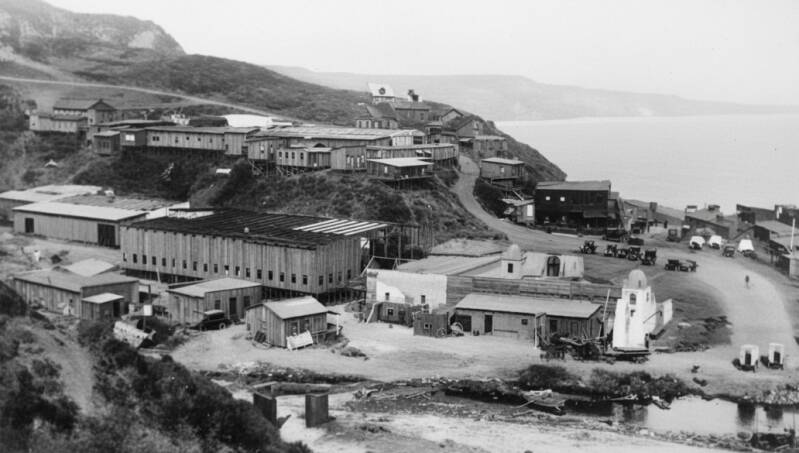
This studio was unlike anything seen before in film. Rather than just building a stage or a few outdoor sets, Ince created a full production community. First called the Miller 101 Bison Ranch Studio and later renamed "Inceville," it had production offices, labs, dressing rooms, prop warehouses, carpentry shops, silent stages, a commissary for hundreds of workers, and many permanent sets. At its peak, about 700 people lived on the property.
When people visited Inceville, they might see a Western town, a New England village, a Puritan settlement, a Swiss alpine scene, a Japanese village, Native American camps, army forts, ranches, or even entire city streets. Instead of making sets for just one film and tearing them down, Ince built sets he could reuse. This approach saved money, improved efficiency, and helped turn filmmaking from a novelty into a real industry.

The real breakthrough at Inceville was not just its size, but how it operated. Before Ince, directors and camera operators usually made the decisions on set. At Inceville, the producer was in charge. Writers prepared scripts ahead of time, production managers handled schedules and budgets, and directors managed their own teams. Ince made the final decisions. Several films could be made at once, each moving smoothly through a set process. This became the model for the studio system that would dominate Hollywood for years.

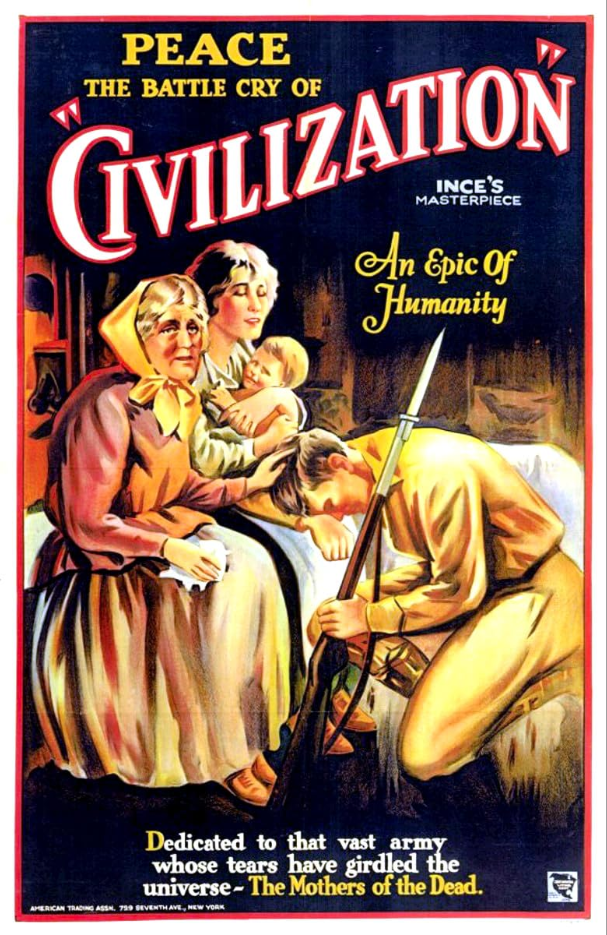
The movies made at Inceville set many standards for early American cinema. Westerns became the main focus, and the large property was perfect for stories about the Wild West. Many of these films starred William S. Hart, who helped bring a more realistic and complex style to the genre. Notable films shot there include Hell's Hinges (1916), seen as one of the best silent Westerns, and Civilization (1916), a large anti-war film with thousands of extras and huge sets. Earlier movies like Custer's Last Fight (1912) showed Ince's big ambitions.

Above is a scene from Civilization (1916), filmed at Inceville.
The best example of this kind of filmmaking was the epic movie Civilization. The city built for the film took months to complete and needed many carpenters. It was located near where Marquez Elementary School would later be built and was the largest set ever made for a movie at that time. Audiences only saw a small part of it, but the scale showed that Ince was willing to spend whatever it took to create a visual spectacle.
However, the beautiful land that drew Ince to Inceville would become its greatest obstacle. Inceville burned down multiple times. Fires were frequent, and in 1915 a wildfire burned part of the property. A larger fire broke out in January 1916, injuring Ince and several workers. This fire consumed buildings and hundreds of feet of film as well. Film at this time was extremely flammable, as they were all made out of nitrate film stock. Other tragedies also befell the sets, such as mudslides and landslides, which would force production to halt at times.

A panoramic view of Inceville stretches south from the Santa Monica Mountains to the Pacific Ocean, revealing the spectacular coastal landscape that Thomas H. Ince transformed into one of Hollywood's earliest and most innovative motion picture studios.

A Scottish village street set, built for actress Billie Burke, stands ready for filming at Inceville. In the foreground, Thomas H. Ince points toward the elaborate outdoor set, a testament to the scale and ambition of his pioneering filmmaking operation.
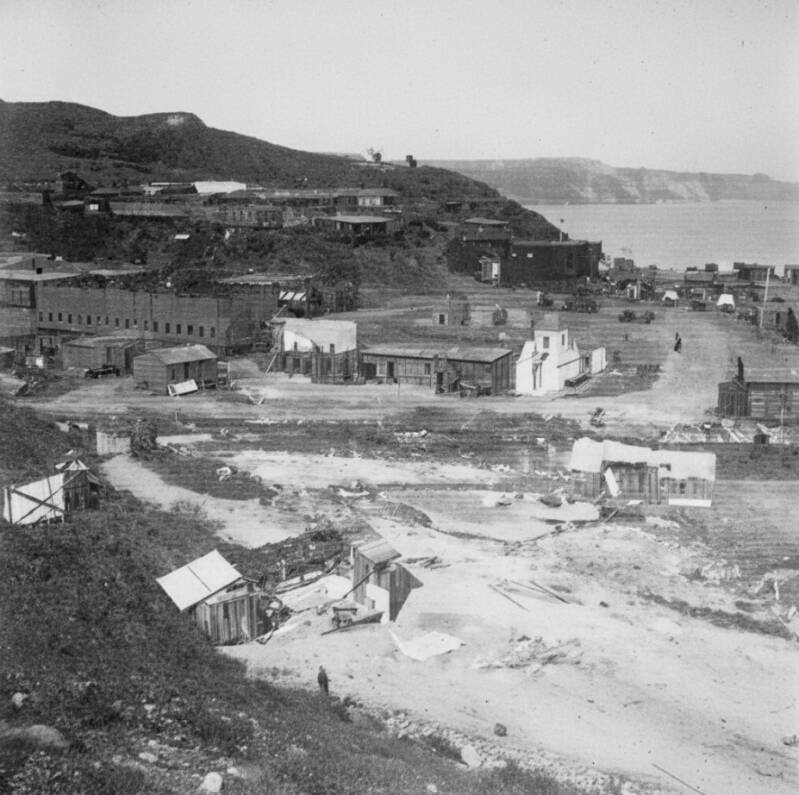
Another view of Inceville looking east from the approximate site of today's Gladstones restaurant, showcasing the expansive coastal landscape that served as Thomas H. Ince's remarkable outdoor motion picture studio.
By 1915, Ince’s ambitions had outgrown the canyon. He joined forces with D. W. Griffith and Mack Sennett to create the Triangle Motion Picture Company and built new studios in Culver City. Inceville stayed open for outdoor filming, but the heart of Ince’s work moved inland. William S. Hart later bought the property and called it Hartville. Eventually, Robertson-Cole Pictures took over and continued filming there into the early 1920s.
The end came slowly and then all at once. Production ground to a halt by the early 1920s. In July 1922, a major wildfire destroyed most of what remained. Another fire in 1923 swept through Santa Ynez Canyon and wiped out the last traces of the movie colony. For a time, the ruins of a stone church stood as a reminder, but even that was gone by the 1930s.
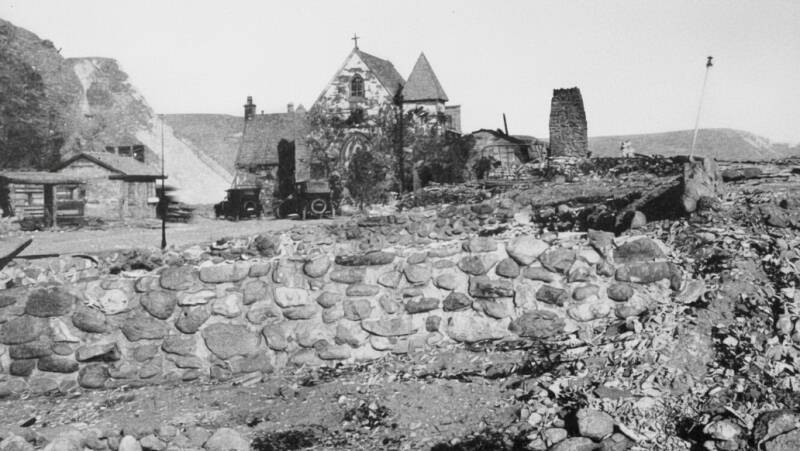
Above are the ruins of Inceville after the devastating fire that destroyed nearly all of the studio's buildings and sets. For several years, the shell of a stone church remained standing as a haunting reminder of the once-thriving filmmaking community, but by the 1930s even that final landmark had disappeared.
Thomas Ince would never live to see his creation completely die out. He unexpectedly passed away in November of 1924 from a sudden illness that occurred on board William Randolph Hearst's yacht. Heart failure was said to be the cause of death, but rumors have persisted about the nature of his death to this day. Either way, Hollywood lost one of its most talented innovators at the young age of forty-four.
Today, Inceville no longer exists. Where movie sets and busy film crews once worked, there are now homes, schools, and public landmarks. Some of the land became the Self-Realization Fellowship Lake Shrine, while other parts turned into neighborhoods in Pacific Palisades and the Palisades Highlands. People driving on Pacific Coast Highway or hiking in Santa Ynez Canyon may not realize they are passing over ground that helped shape the film industry.
But Inceville’s legacy is not found in surviving buildings. It lives on in every major studio lot, every production schedule, every producer managing several films, and every film company run as a single unit. The five major studios—MGM, Warner Bros., Paramount, Fox, and others—followed the path Thomas Ince started by the Pacific.
The buildings are gone, and the sets have disappeared. Even the church façade is now just a memory. Still, the legacy Thomas Ince created on those bluffs above the sea changed movies forever. Inceville was more than a studio—it was where Hollywood learned what it could become.
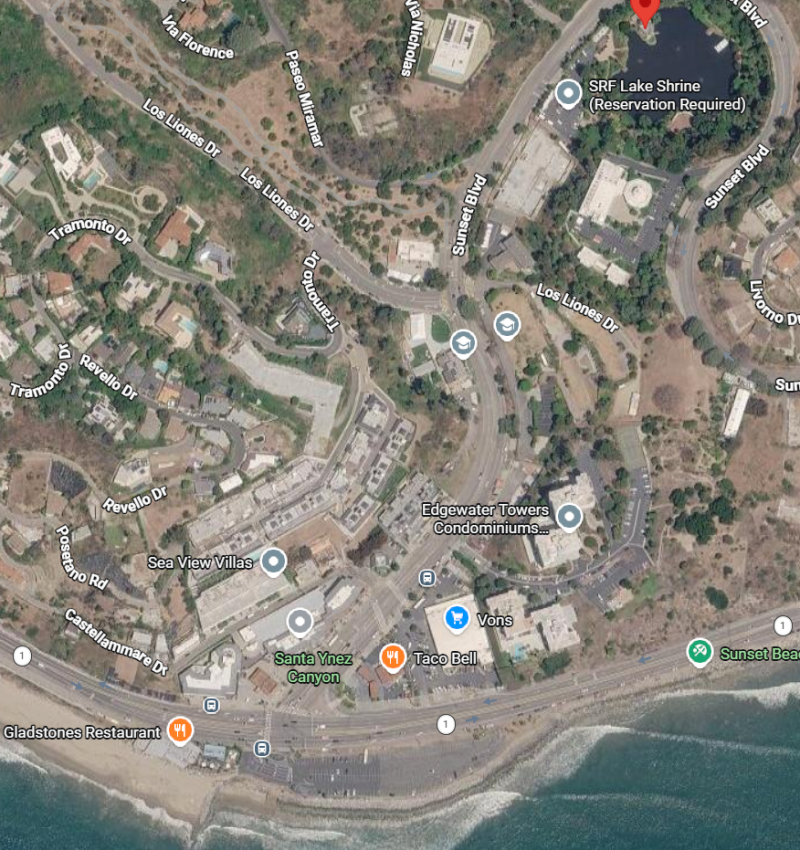
The map above shows the approximate location of Thomas H. Ince's pioneering Inceville studio near the intersection of Sunset Boulevard and Pacific Coast Highway in Pacific Palisades. The site lies just east of the present-day location of Gladstones restaurant.
Be sure to check back tomorrow for another journey into Hollywood's fascinating past as The Hollywoodland Revue uncovers another remarkable story from the Golden Age of motion pictures. You never know what forgotten landmark, legendary personality, or little-known chapter of film history we'll bring back into the spotlight next!
If you enjoyed this journey into the fascinating history of Thomas H. Ince's pioneering seaside studio, I'd love to hear your thoughts. Please leave a comment, rate the article, and share it with fellow film history enthusiasts. Have you ever visited the former site of Inceville, or do you have a favorite Thomas H. Ince film? Join the conversation and help keep the story of one of Hollywood's earliest and most influential studios alive.

Add comment
Comments