

Even before Hollywood and Vine became one of the most well-known intersections in the world, the area was a place where actors who were having trouble finding work would go. They waited for the buses, swapped stories about the studios, and hoped that somebody might give them a day as an extra. It is said in Hollywood legend that Lon Chaney also used to wait there.
By Allan R. Ellenberger
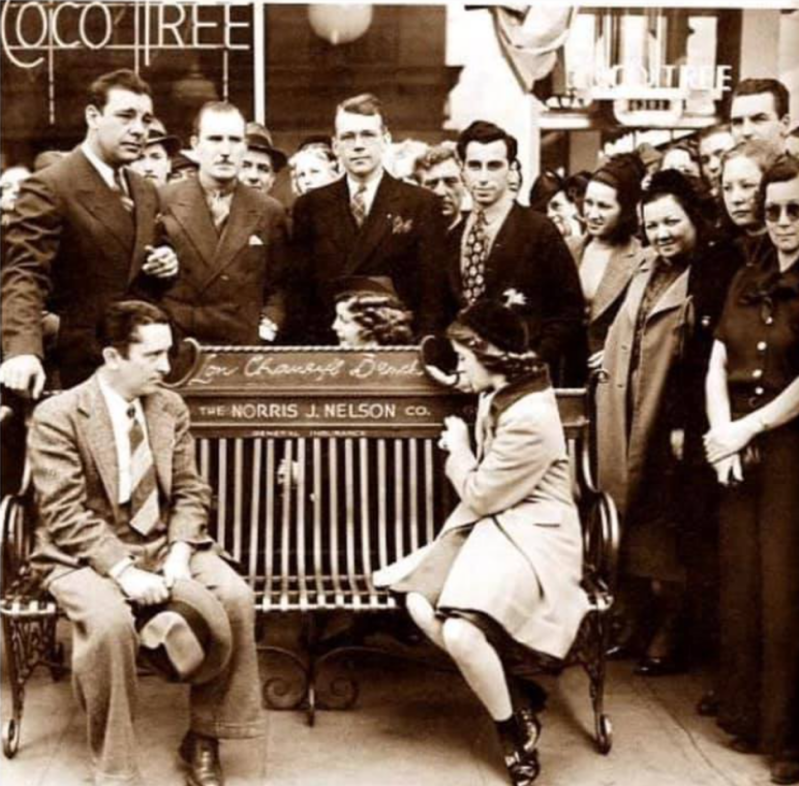
The bench at Hollywood and Vine where Lon Chaney reportedly waited for transportation to the studios during his early days as an extra—and where his ghost was later said to appear. The bench was stolen in 1942.
It is said that many years before he became the famous "Man of a Thousand Faces," Chaney had sat on a public bench close to the intersection of Hollywood Boulevard and Vine Street while he was waiting for transport to Universal Studios; that simple seat has since become a memorial honoring the actor, a well-known feature of the neighborhood and the focal point of one of old Hollywood's most bizarre ghost stories.
Leonidas Frank Chaney was born in Colorado Springs on April 1, 1883, and he was the child of parents who were deaf; from an early age he developed the ability to communicate by means of gestures, expression and pantomime. This skill proved to be very important in his career as an actor. Following a period working in the theater, he moved into the film industry in the 1910s and gradually progressed from playing small parts to becoming a star.
In the 1920s Chaney was one of the most admired actors in Hollywood, thanks to his habit of altering his appearance using complicated makeup and giving intense physical performances. Films he appeared in were The Hunchback of Notre Dame, The Phantom of the Opera, The Unknown, London After Midnight and The Unholy Three; he died on August 26, 1930, having been only forty-seven years old.
The bench linked with Chaney first gained public recognition in October 1942, when Los Angeles City Councilman Norris Nelson referred to it during a discussion on sidewalk advertising. He stated to the City Council that he had installed an ornamental iron bench at the corner of Hollywood and Vine some fifteen years before. As reported by the Los Angeles Times, Nelson said that Chaney had once waited on the bench for a bus while he was working as an extra.
As Nelson remarked, when Chaney was a star, he used to drive past and pick up some of the poor fellows who were still playing minor roles. After Chaney died, it was said that his ghost was seen sitting on the bench, and at one place a seat was allegedly left for him. The story was very appealing because it included all the things that Hollywood admired: poverty, fame, generosity, tragedy and a ghost.

Los Angeles City Councilman Norris Nelson recalled the bench during a debate over sidewalk advertising, telling the council that he had installed the ornamental iron seat at Hollywood and Vine approximately fifteen years earlier.
Chaney had built up his career in films by playing outsiders, troubled men and tragic figures who were concealed behind masks; it seemed entirely appropriate that his spirit should return to the usual bench associated with him. There were some stories which stated that people passing by would avoid sitting in the seat that was set aside for him.
The story also showed off Chaney's good reputation when it came to struggling actors. Boris Karloff later said that Chaney had given him encouragement during his tough early years and had told him to develop a particular style which no other actor could copy. Even though Karloff was said to have been at the same bus stop, the idea that Chaney gave him advice on his career while they were sitting on the Hollywood and Vine bench is more in the nature of tradition than something that has been confirmed.
There are also difficulties regarding the timeline; if Nelson put the bench in about 1927, Chaney at that time was already a well-known star, not an unknown extra. The bench which Nelson placed there could not have been the very seat that Chaney used during his early years in Hollywood. It might have been located at the same transit stop or may have replaced an earlier bench that the local people remembered as being the place where Chaney used to wait.
The fact that the bench had disappeared turned the legend into a local controversy. Nelson found out in October 1942 that his decorative bench was missing, and, in its place, there was a commercial bench promoting cheap cigars. "A ghost of any respect for itself wouldn't sit on a bench like that," he complained. "My bench should be put back."
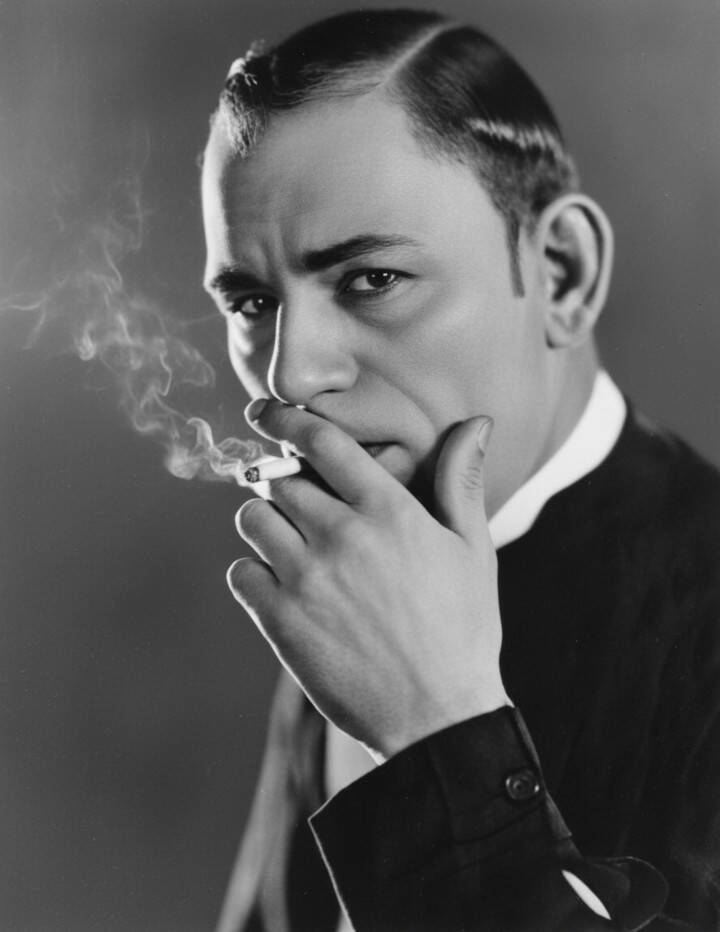
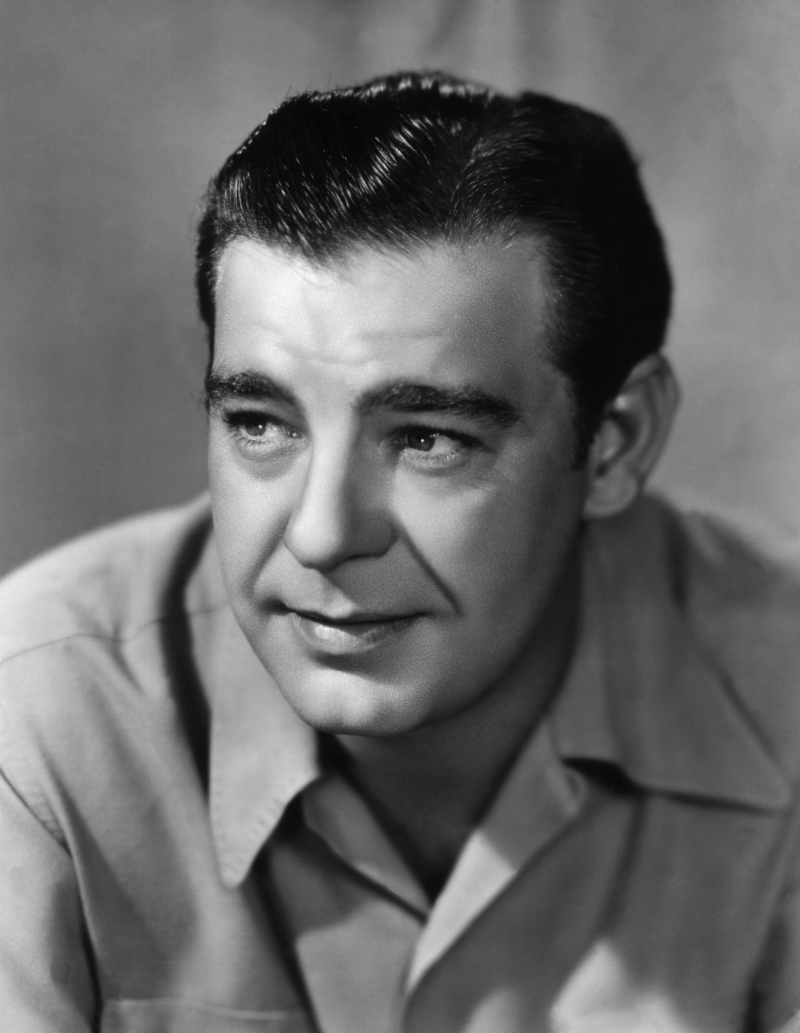
The newspapers took up the story at once, the Los Angeles Times stating, "The Ghost of Lon Chaney Plays a Part in the Council Controversy", and the Los Angeles Evening Citizen News saying, "Lon Chaney's Bench Disappears; the Official Wishes It to Be Returned."
Under the humorous headlines there was a real dispute about the placement of advertising benches on public sidewalks. The City Council was looking at loosening the regulations so that benches could be installed with fewer restrictions. Nelson opposed the idea of replacing attractive public seating with brightly painted commercial advertisements, and the removal of the Chaney bench provided him with a vivid example to support his argument.
Initially, it seemed that the bench had either been taken away or replaced; but by November 1942 the newspapers had reported that it had been stolen, that a thief had taken the well-known bench from Hollywood and Vine and that Nelson had asked the City Council to assist in getting it back.
The original bench was never discovered in a public setting. Since it was made of iron and vanished during World War II, it was later believed that it might have been taken for its metal and melted down. The existence of wartime salvage schemes made this possibility plausible, but no evidence has come to light. Together with so many other items from early Hollywood history, it has simply disappeared.

The northeast corner of Hollywood and Vine, where Lon Chaney’s legendary bench once stood.
When the city later installed another commemorative bench at the intersection, the story became more complicated. One account that has survived refers to a handsome bench with Lon Chaney’s name welded into the iron; it had been donated by a Hollywood businessman and was officially accepted by Lon Chaney Jr. at a ceremony which was attended by public officials and film stars.
The same account mentioned that a previous bench erected in Chaney's honor had been stolen many years earlier. This indicates that there may have been more than one memorial bench throughout the years — an ordinary transit bench connected with Chaney's difficult times, Nelson's ornamental iron bench and a later replacement inscribed with the actor's name.
In the end, those individual benches became part of the general memory. The image that remained was of Lon Chaney sitting at the corner of Hollywood and Vine, waiting for a ride to the studio. This picture embodied a Hollywood in which an unknown extra could one day become an international star; it also kept alive the notion that Chaney, having achieved success himself, had remembered those who were still waiting for their turn.
The bench disappeared, but the tale of it has continued to live on; its precise location, look and fate are still unknown and the idea that the city dissolved it for wartime scrap has never been proven. Still, the thief—no matter who he was—did not entirely remove it. Nowadays the bench can be found in newspaper articles, in Hollywood folklore and in the lasting legend concerning Lon Chaney’s ghost. Although it was merely a place to sit and wait, in Hollywood waiting has always been an integral part of the story.
Did you know a memorial bench at Hollywood and Vine was linked to Lon Chaney—and even sightings of his ghost? Please comment, rate, and share my latest blog post about the strange mystery of Chaney’s vanishing bench.
Add comment
Comments