

Emily Wortis Leider, a highly respected author and cultural historian who had written biographies of Rudolph Valentino, Mae West, Myrna Loy and Gertrude Atherton in order to examine the complex human beings underlying the carefully crafted public images of these individuals, died in San Francisco on July 16, 2026, and was 88 years old.
By Allan R. Ellenberger

Emily Wortis, who was born on December 23, 1937, in New York City, is one of twin children of Helen Zunser Wortis, a social worker, and Dr. Joseph Wortis, a psychiatrist and author. Her twin brother, Edward Irving Wortis, too became a well-known writer and was recognised by generations of young readers under the name Avi.
The family had a strong tradition of writing; Miriam Shomer Zunser, Leider's maternal grandmother, was a writer, playwright, sculptor and newspaper columnist, and her recollections of Jewish life in Eastern Europe were later published as Yesterday: The Memoir of a Russian-Jewish Family. In 1978 Leider prepared for Harper & Row a new edition of her grandmother's memoir in order to help keep alive a significant part of her own family's history.
Leider first went to New York's High School of Music & Art before obtaining her bachelor's degree in English from Barnard College in 1959 and then completing her master's degree at Columbia University in 1961. She married William Leider in 1957, just before her twenty-first birthday, and the two remained married for almost seven decades. The couple had two children, Jean and Richard.
When William's medical training led the family to California, Emily went on to do postgraduate study at the University of California, Berkeley, and then taught English literature and writing at Northwestern University. In the end the family settled permanently in San Francisco, the city which was to remain her home for the rest of her life.
Leider started out as a poet; her first book, Rapid Eye Movement & Other Poems, came out in 1976, and she subsequently taught courses in poetry and women's studies at Antioch College West. Yet over time her interests shifted to biography and cultural history, with a particular focus on the lives of women and Hollywood figures whose public legends had obscured their more complicated realities.
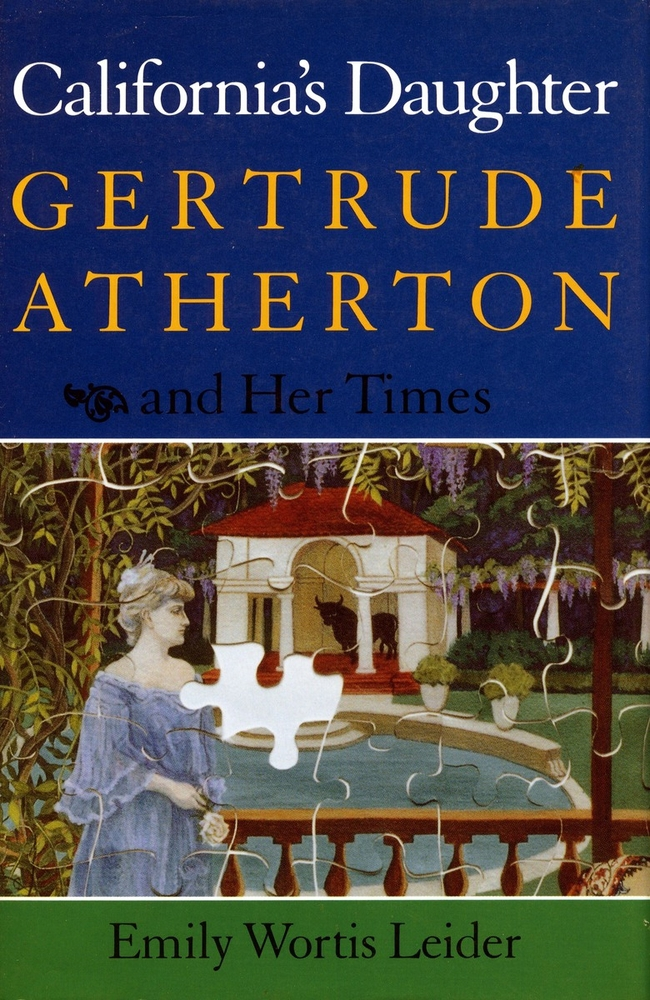


Her first major biography, California's Daughter: Gertrude Atherton and Her Times, was published by Stanford University Press in 1991 and dealt with the well-known and at times controversial California novelist. Six years later Becoming Mae West appeared, this being a thoroughly researched account of how a vaudeville performer born in Brooklyn transformed herself into one of America's most well-known—and provocative—cultural figures.
For fans of silent films, however, Leider will most likely be remembered for Dark Lover: The Life and Death of Rudolph Valentino, which was published in 2003. Although Valentino had been dead for more than three-quarters of a century, details about his life had still remained hidden behind speculation concerning his marriages, his sexuality, his ideas of masculinity, and his great fame. Leider went back to the historical record with the aim of distinguishing Rodolfo Guglielmi, the Italian immigrant, from Rudolph Valentino, the artificially created 'Great Lover'.
The book looked at Valentino's journey from being an immigrant outsider to becoming one of the world's first international film stars, and it also investigated the strong reactions that he caused in 1920s America. The way he looked, the clothes he wore, his foreign background, and his sensuous image on screen all went against the usual ideas of what American masculinity should be. Leider situated episodes such as the infamous "Pink Powder Puffs" fashion editorial within the broader cultural discomfort about a male star whose huge popularity was mainly due to women.
It is important that she did not treat speculation as if it were fact. Since speculation about Valentino's sexuality had accumulated over many decades, Leider looked at the evidence without pretending that all questions could be answered. The outcome was a biography that had been carefully researched and is therefore an important modern study of Valentino and the cultural phenomenon surrounding him.
In 2011, Leider once again turned to the subject of Hollywood with her biography Myrna Loy: The Only Good Girl in Hollywood. The book traces Loy's life from her childhood in Montana through the silent film era, her period of stardom at MGM and the highly popular Thin Man films, while also highlighting parts of Loy's life which were usually obscured by her glamorous image on screen, such as her political activism and her humanitarian work.
Leider's subjects followed a certain pattern: Mae West had come to stand for sexuality, Valentino was the eternal Great Lover, and Loy represented Hollywood's ideal sophisticated wife. What interested Leider was to see what occurred when those convenient stereotypes were taken away from them. She admired her subjects without worshipping them and doubted the legends without aiming to destroy them.

Because of her expertise she was often invited to give talks on Hollywood and cultural history, and her poetry and articles were published in a great many journals. When not at her desk, her family recalled a woman who enjoyed movies, music, cooking, travel, books, cats and plants, had a liking for puns, and was known for her contagious laugh.
Leider was survived by her husband William, her children Jean and Richard, her brothers Avi and Henry Wortis, and her grandchildren. In place of flowers, her family has suggested a memorial action which seems very appropriate indeed: to support a local arthouse movie theater and bookstore. It is hard to think of a more fitting way of remembering a woman whose life was so at home in those two fields.
Emily Leider realised that eventually every biographer has to face the fact that fame tends to simplify people; it takes complex lives and turns them into stories that can be easily repeated, repetition eventually causing rumours to become impossible to tell apart from facts. Instead, her approach was the opposite: she returned to the evidence, questioned the mythology, and therefore brought back some of the ambiguity which celebrity had removed.
For anyone who is interested in Rudolph Valentino and silent Hollywood, Dark Lover means that Emily Leider's work will keep on being referred to, discussed, and valued. It is especially touching to know that Emily will be remembered at this year’s Rudolph Valentino Memorial Service, a fitting tribute to a writer who devoted so much care and scholarship to preserving the truth behind Valentino’s enduring legend. Throughout her career she has always strived to go beyond the legends in order to discover the people who lay behind them. Today it is her books that remain behind to speak on her behalf.
If you knew Emily Wortis Leider, were touched by her writing, or appreciated her important contributions to film history and biography, I invite you to respectfully share your memories or thoughts in the comments. Please also take a moment to rate and share this remembrance so that her work and legacy can reach others who valued her scholarship and the stories she preserved.
Add comment
Comments