

There is a certain expectation that comes with a documentary centered on a First Lady—particularly one as enigmatic and carefully managed as Melania Trump. One expects revelation, context, perhaps even contradiction. Instead, Melania (2026), directed by Brett Ratner, arrives as something far more elusive and, ultimately, far less satisfying: a glossy, expensive exercise in image control that reveals almost nothing about the woman at its center.
Reviewed by Allan R. Ellenberger
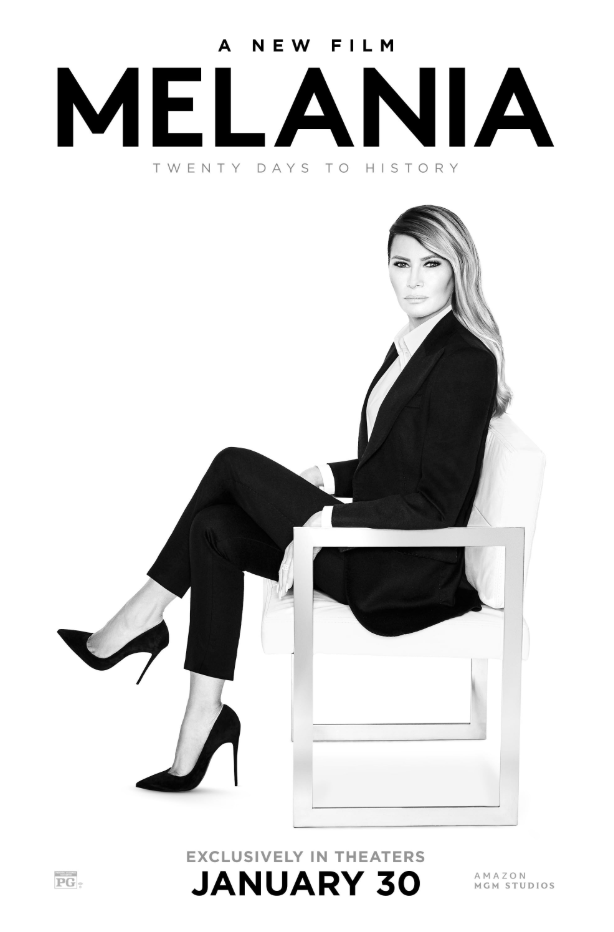
Produced and distributed by Amazon MGM Studios, the film was conceived as a high-profile documentary following Melania Trump in the weeks leading up to Donald Trump’s second inauguration. Amazon’s involvement looms large over the entire production. The company reportedly paid tens of millions for the rights and poured additional resources into marketing, transforming what might have been a modest documentary into one of the most expensive non-fiction films ever produced. This scale of investment, widely questioned at the time, fueled speculation that the film existed as much for political optics and corporate positioning as for storytelling itself—a perception that the finished product does little to dispel.
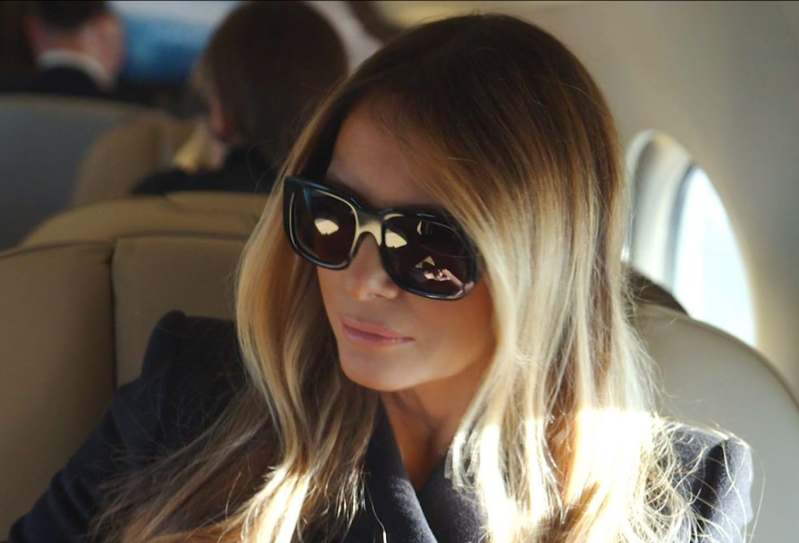
On screen, Melania unfolds as a carefully curated chronicle of appearances, fittings, and ceremonial preparation. We watch the First Lady move through rooms, events, and conversations, but the camera rarely penetrates beyond the surface. Critics were nearly unanimous in their assessment: the film is “presented with great pomp… while revealing very little,” and in harsher terms, dismissed as “propaganda” or an “infomercial” masquerading as documentary filmmaking.
Even the structure works against it—long stretches of inactivity punctuated by abrupt shifts, interviews that offer praise but no substance, and a conspicuous absence of historical or personal grounding.
And that is precisely where the film falters most profoundly. I didn’t learn anything about the First Lady. There is nothing here about her life, her upbringing, her family, or the forces that shaped her. Instead, we are given a series of images—polished, distant, and curiously hollow. At times, the film drifts into outright monotony, its pacing so languid and uneventful that even its visual elegance cannot sustain interest. It is, quite simply, boring in many parts. One suspects that perhaps if I were a devoted admirer of the Trump family, the film might carry a different weight, but as a work of cinema—or even of biography—it remains stubbornly inert.
The paradox of Melania lies in the extraordinary divide between critics and audiences. Professional reviewers have largely condemned it, with some outlets awarding it near-bottom scores and describing it as “overwhelmingly disliked” and devoid of insight. Yet audience ratings, particularly among sympathetic viewers, have been strikingly high, creating a cultural split that speaks less to the film’s merits than to the polarized environment into which it was released. Online platforms amplified this divide further, with some users openly admitting to rating the film negatively without even seeing it, while others embraced it as a rare, intimate glimpse into a public figure they already admired.
Complicating matters further is the presence of Brett Ratner behind the camera. Once a successful Hollywood director known for mainstream hits, Ratner’s career collapsed following multiple allegations of sexual misconduct in 2017—allegations he has denied. Melania marks his return to feature filmmaking after more than a decade, and the choice of project is telling. Rather than a creative reinvention, the film feels like a calculated reentry—high-profile, politically charged, and designed to generate attention regardless of its artistic value. The result is a work that carries the weight of controversy without the substance to justify it.
Why was Melania produced? The answer seems to lie less in storytelling than in alignment—between celebrity, politics, and corporate ambition. Amazon, with its vast resources and global reach, appears to have bet not on critical acclaim but on visibility and long-term streaming value. The theatrical release, though initially strong in select markets, has struggled to justify its enormous cost, reinforcing the impression that the film’s true purpose lies in branding rather than box office success.
In the end, Melania stands as a peculiar artifact of its moment: a film that promises access but delivers distance, that presents a subject yet refuses to explore her. It is polished, expensive, and curiously empty—a portrait without a pulse. For a figure as inherently fascinating as Melania Trump, that may be its greatest failure.
Rating: ½ star

Have you seen Melania (2026)? What did you think? Please comment, rate and share.
Add comment
Comments