

Among the many stars who rose from humble beginnings to define the early years of Hollywood, few carried their origins as quietly—and as enduringly—as Janet Gaynor. Born Laura Augusta Gainor on October 6, 1906, in Philadelphia, Pennsylvania, she would become not only one of the most beloved actresses of the silent era, but the very first recipient of the Academy Award for Best Actress. Her journey from Pennsylvania to international fame was neither swift nor inevitable, but it was marked by persistence, adaptability, and a natural emotional clarity that would make her performances timeless.
By Allan R. Ellenberger

Gaynor spent her early years moving with her family, eventually settling in California, where she attended high school and began to nurture an interest in acting. Like many hopefuls of the 1920s, she entered the motion picture industry at the lowest rung, working as an extra and bit player at various studios. It was at Fox Film Corporation that she finally found her footing. There, her delicate features and expressive face—so well suited to the silent screen—quickly set her apart. By the mid-1920s, she had begun to secure leading roles, and in 1927 she achieved a breakthrough that would permanently secure her place in film history.
That year, Gaynor delivered a trio of performances—most notably in 7th Heaven, as well as Sunrise: A Song of Two Humans and Street Angel—that demonstrated her remarkable emotional range. In 7th Heaven, directed by Frank Borzage, she portrayed a fragile yet resilient young woman whose capacity for love transcended hardship. The role resonated deeply with audiences and critics alike, and at the inaugural Academy Awards ceremony, Gaynor was honored with the first Best Actress Oscar, awarded for her work across multiple films—a distinction never repeated in quite the same way.
As Hollywood transitioned from silent films to sound, many actors faltered, but Gaynor adapted with ease. Her soft, natural voice and understated style allowed her to move seamlessly into talking pictures, where she continued to build a distinguished career. Throughout the late 1920s and 1930s, she remained a major presence, balancing light comedies with emotionally grounded dramas. Her most enduring later role came in A Star is Born, where she portrayed Vicky Lester, an aspiring actress whose rise to fame is shadowed by personal tragedy. The performance earned her another Academy Award nomination and introduced her to a new generation of audiences, cementing her legacy in one of Hollywood’s most frequently revisited stories.

Laura Augusta Gainor at 12 years-old

Gaynor and Charles Farrell in 7th Heaven (1927)
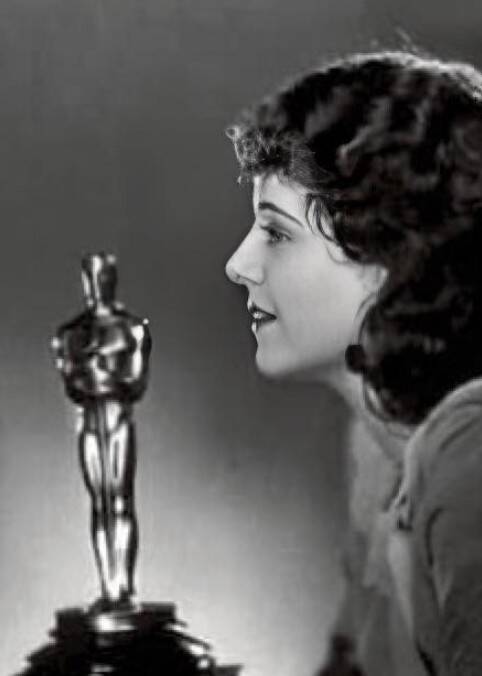
Gaynor and the first Best Actress Oscar
Beyond the screen, Gaynor’s personal life reflected both stability and artistic connection. She was married to famed costume designer Adrian, one of Hollywood’s most influential figures in fashion, whose work defined the look of an era. Their marriage, which lasted until his death in 1959, was widely regarded as one of the industry’s most harmonious unions. Together, they cultivated a life that balanced professional success with private contentment, eventually settling into a quieter existence away from the relentless pace of studio production.
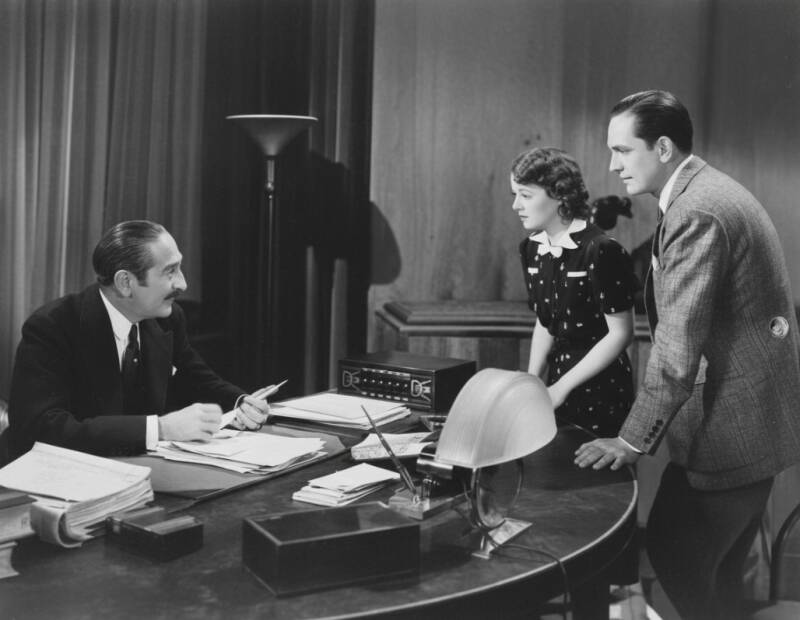
Adolphe Menjou, Janet Gaynor and Frederic March in the first production of A Star Is Born (1937).
By the late 1930s, Gaynor began to withdraw from films, choosing to focus on her personal life and occasional stage work. Though she never entirely abandoned performance, she stepped away at a time when her reputation remained intact, leaving behind a body of work that continued to be admired for its sincerity and emotional truth. Unlike many of her contemporaries, she did not linger in diminishing roles but instead allowed her screen image to remain largely untarnished by time.
Tragedy touched her later years in a profound way. In 1982, Gaynor was involved in a serious automobile accident that left her with lasting injuries. Though she survived, her health was significantly compromised, and complications from those injuries would follow her into her final years. On September 14, 1984, she died at the age of seventy-seven at Desert Hospital in Palm Springs, California, from pneumonia related to the accident. It was the end of a life that had begun in Pennsylvania and stretched across the formative decades of American cinema.
Following her death, Gaynor was cremated, and her remains were placed at Hollywood Forever Cemetery, within the Garden of Legends (Section 8, Lot 193, Grave 4), next to her husband Adrian. There, among many of the figures who shaped the motion picture industry, rests a woman whose career helped define its earliest achievements.
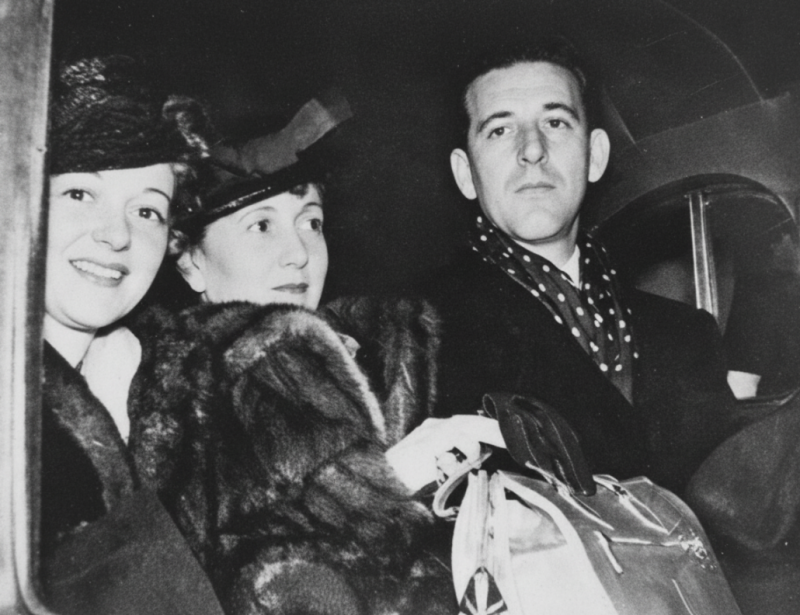
Janet Gaynor, her mother Laura and husband Adrian.

The grave of Janet Gaynor next to her husband Adrian at Hollywood Forever Cemetery.
Janet Gaynor’s legacy is one of quiet revolution. She did not dominate the screen with flamboyance or spectacle, but with an emotional honesty that made her characters deeply human. From her Pennsylvania beginnings to her place in Hollywood history, she remains a figure of enduring significance—the first to be recognized by the Academy, and one of the finest actresses of her generation.
If you enjoyed this look at Janet Gaynor and her enduring legacy, please comment, rate, and share the article with fellow readers.
Add comment
Comments