

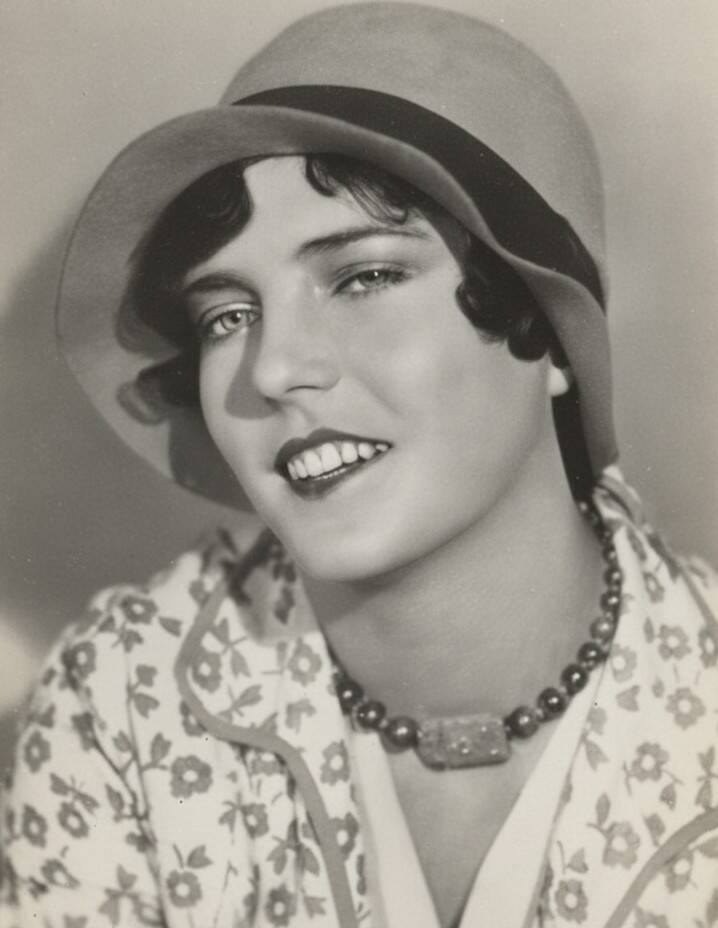
Long before Hollywood acknowledged queer identity, addiction, and sexual freedom, Pepi Lederer lived dangerously and restlessly at the center of one of its most glamorous and scandalous circles. Beautiful, reckless, and charismatic but emotionally adrift, Pepi moved through the lavish world of Marion Davies and William Randolph Hearst like a bright flame—driven, searching, and ultimately self-destructive. Her short life brimmed with privilege, wild parties, forbidden romances, painful addiction, and tragedy, ending in a shocking suicide that sent tremors through the Hearst empire in 1935.
By Allan R. Ellenberger

Born Josephine Rose Lederer on March 28, 1910, in Chicago, Pepi was the daughter of actress and writer Reine Davies (sister of Marion Davies), and Broadway producer George Lederer. After her parents divorced when she was very young, Pepi and her brother Charles—later a successful screenwriter—became closer to Marion than to their mother. By age twelve, Pepi spent much of her time at San Simeon and Marion’s Lexington Avenue mansion in Beverly Hills, growing up among movie stars, politicians, artists, and newspaper royalty.
Nicknamed “Peppy” as a child for her spirited personality, she later shortened it to “Pepi” and legally adopted the name. At San Simeon, she was allowed freedoms few others enjoyed. While Hearst enforced strict household routines for guests, Pepi and her circle of young bohemians drank heavily, stayed up all night, and openly flaunted social conventions. Actress Louise Brooks later recalled that Pepi and her crowd of “pansies and dykes” carried on openly under Hearst’s roof so long as they did not embarrass Marion or damage Hearst’s art collection. Pepi and her inner circle—including Brooks, actor William Haines, actress Sally O’Neil, Lloyd Pantages, and her brother Charlie—became known among guests as “The Younger Degenerates.”
Pepi possessed a wickedly theatrical sense of humor and delighted in humiliating pompous guests. The falsies of actress Claire Windsor or the famous red wig of novelist Elinor Glyn would mysteriously disappear during visits. False “exclusive” gossip items would somehow appear in Louella Parsons’ syndicated Hearst column, only to require embarrassing retractions later. During one infamous gathering, Pepi orchestrated a chain dance in which beautiful women in wet bathing suits circled a table of stunned Hearst executives, stealing bottles of liquor as they danced away while confused businessmen nervously asked, “Does Mr. Hearst know these people are here?”
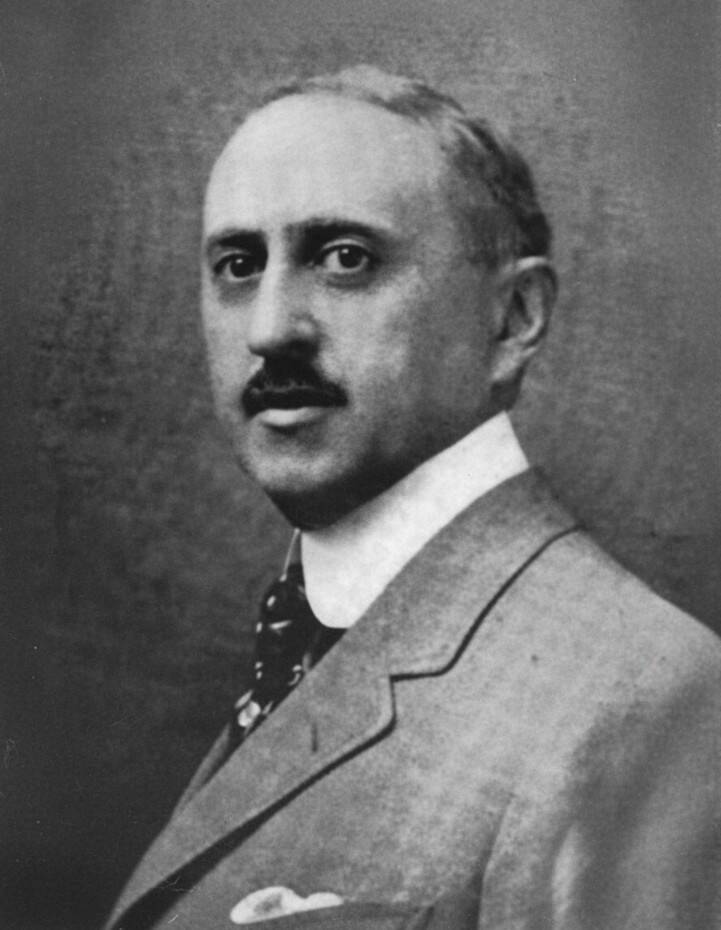
Pepi's father, musical theatrical producer George Lederer (1862-1938).
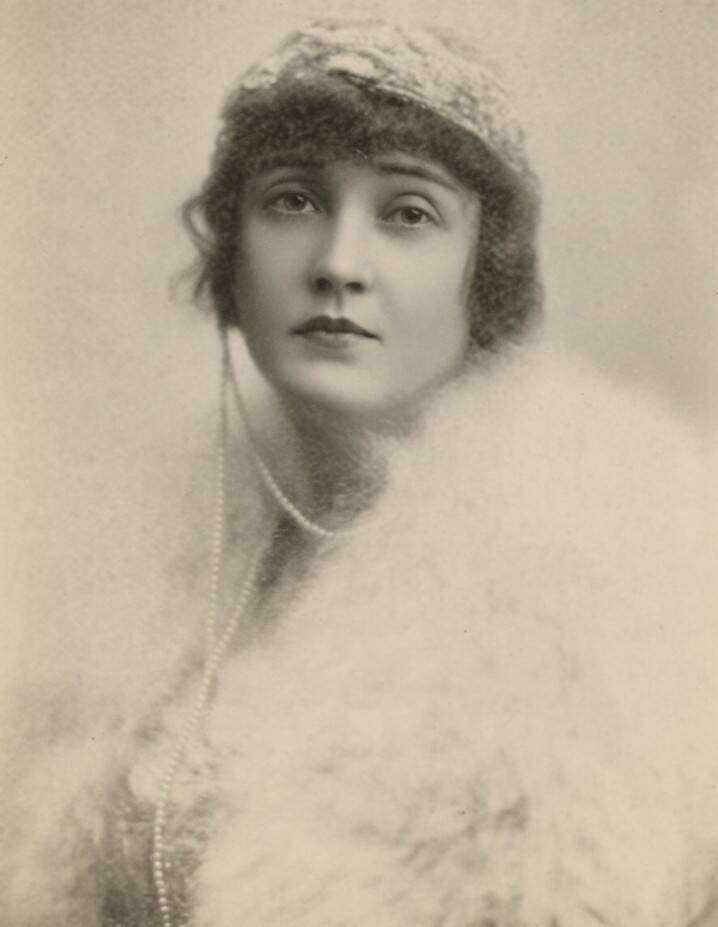
Pepi's mother, stage actress and writer Reine Davies (1883-1938), and sister of Marion Davies.
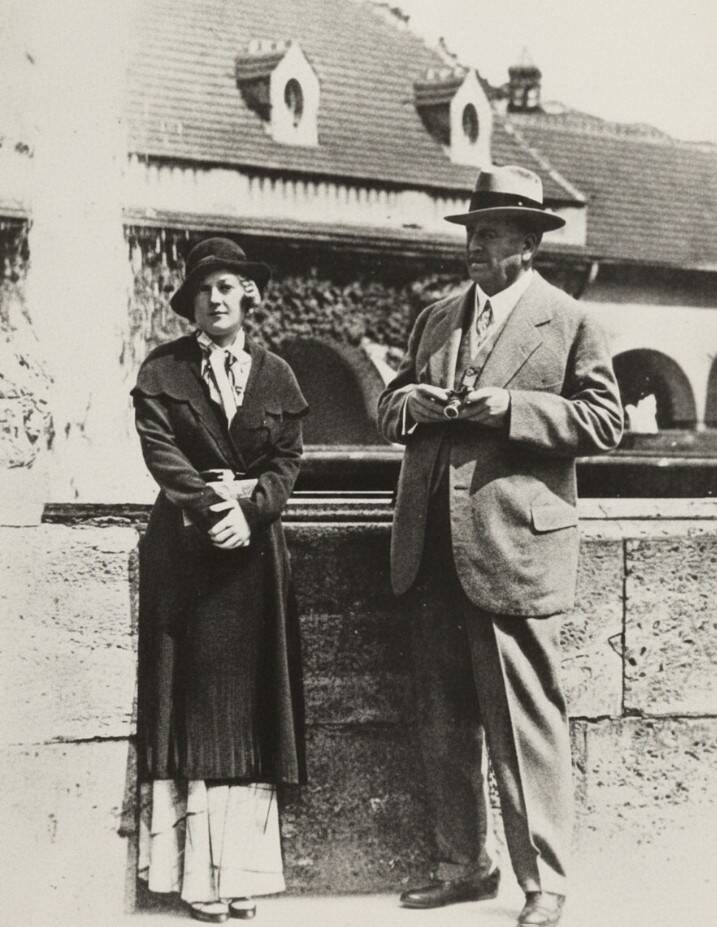
Pepi's aunt, actress Marion Davies with William Randolph Hearst on their European vacation.
Yet beneath the charm and glamour was a deeply troubled woman. Pepi’s slide into alcoholism, cocaine addiction, and emotional instability cast a persistent shadow. Her compulsive indulgence in food, liquor, and drugs masked growing despair. In one attempt to sober up, she persuaded Louise Brooks to join her at a secluded Virginia duck blind. After a few days without alcohol, Pepi smashed open the locked liquor cabinet with a hatchet, returning with relief and resignation to whiskey and Southern cooking. As Bing Crosby records played, the mood of defeat mingled with fleeting moments of comfort.
Pepi’s sexuality was unconventional for the period. She never publicly defined herself but openly pursued romantic and sexual relationships with women, despite the social risk. Louise Brooks later recounted that Pepi seduced her, recalling Pepi’s words: “Let me just fool around a bit.” Brooks replied, “Okay, if it’s anything you’re going to get some great enjoyment out of, go ahead.” Brooks later reflected, “I got nothing out of it.” These recollections help illustrate the sexual openness of the San Simeon circle.

Pepi and Marion in a scene from The Fair Co-Ed (1927).

Pepi had affairs with actresses Louise Brooks (above) and Nina Mae McKinney (below).
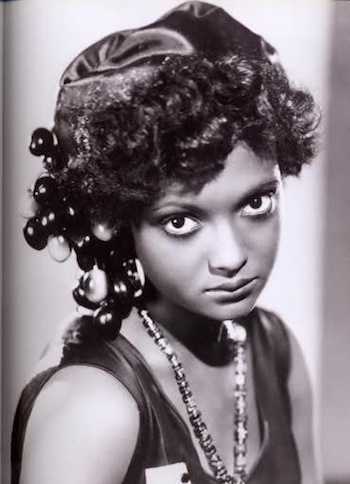
Pepi’s lesbian relationships increasingly shaped her identity and social life. In 1929, she invited members of the mostly Black cast of Hallelujah to Marion’s Lexington Avenue mansion while Marion and Hearst were away. The gathering became a three-day interracial party, scandalizing neighbors, who contacted Marion. When Marion’s sister Ethel arrived unexpectedly, she allegedly found Pepi in bed with Nina Mae McKinney. In racially segregated 1929 America, the mix of interracial socializing, homosexuality, and cocaine-fueled partying caused an unforgivable scandal in the Hearst circle, leading to Pepi’s swift exile to New York as punishment.
Yet Pepi’s emotional unraveling deepened. In 1930, she discovered she was pregnant, despite her primarily lesbian relationships. Terrified and confused, she contacted Marion. Marion immediately arranged an abortion. While recovering in bed, Pepi told Louise Brooks she had been raped while unconscious and intoxicated during a New Year’s Eve party hosted by opera singer Lawrence Tibbett. “I don’t want to know the name of a man who would rape a dead-drunk woman,” she reportedly said violently. Years later, after Pepi’s death, one of her acquaintances allegedly confessed to Brooks. He had routinely escorted intoxicated women home and assaulted them in precisely that manner.
The emotional trauma only increased Pepi’s instability. In 1930, she accompanied Marion and Hearst to Europe aboard the Olympic, convincing Hearst to secure her a position at his English magazine, The Connoisseur. During her five years in London, Pepi sought independence from Marion and Hearst’s shadow, and proudly wrote Brooks that she was finally “a person in my own right.”
During this period, she began a serious relationship with Monica Morris, a glamorous, predatory socialite from London’s lesbian theater circles. Monica, nicknamed “The Stage-Door Ferret,” relentlessly pursued actresses, particularly Tallulah Bankhead. Pepi and Monica shared a London flat, traveled together, and indulged in cocaine and nightlife. By their return to America in April 1935, Pepi’s addiction had worsened.
Louise Brooks immediately noticed the damage cocaine had done to Pepi’s appearance and emotional state. Marion and Hearst, deeply distressed by Pepi’s deteriorating condition and dismayed by her erratic behavior, decided they could not stand by any longer. Shortly after returning to California, Pepi was forcibly committed to the psychiatric wing of Good Samaritan Hospital for a drug cure. Before she was taken away, she slipped off the diamond ring Marion had given her on her eighteenth birthday and handed it silently to Monica.
On June 11, 1935, Pepi was in her sixth-floor hospital bed, reading a movie magazine. Witnesses said she calmly asked a nurse for something to eat. As the nurse turned toward the hallway, Pepi lunged through the window screen and plunged six stories into shrubbery below. Her neck shattered on impact. She survived for only a few minutes.
The death certificate ruled Pepi’s death a suicide caused by spinal fractures and other traumatic injuries. Newspapers described her condition as “acute melancholia,” a euphemism often used to conceal addiction, emotional collapse, and mental instability in wealthy families. Dr. Samuel Hirshfeld, a frequent San Simeon guest and an acquaintance of Hearst, supplied the diagnosis. His wording shielded both the Davies-Hearst circle and Pepi’s troubled private life from scandal.


At San Simeon, Marion Davies reportedly collapsed with grief upon hearing of Pepi’s death. Louise Brooks, preparing to perform in New York, later reflected somberly that Pepi’s return to Hollywood “had lasted exactly six weeks.” In the aftermath, Hearst’s people allegedly searched Monica Morris’s belongings. They confiscated Pepi’s letters and reclaimed the diamond ring, fearing future scandal or blackmail. Monica was reportedly handed cash and a steamship ticket to Southampton, and then quietly would be removed from the United States immediately after the funeral.

Two days later, funeral services were held at St. Mary of the Angels Church, officiated by Reverend Neal Dodd. Ironically, only six weeks earlier, Dodd had presided over Pepi’s grandfather’s funeral. Judge Bernard J. Douras was Marion Davies’ father. Mourners gathered, the air heavy with sorrow beneath towering flowers and candlelight, as Reverend Dodd delivered a solemn service for the troubled young heiress. Friends spoke with trembling voices, recalling Pepi’s wit, charm, and generosity. Marion reportedly sat overcome with visible grief beside the flower-covered silver casket, her presence a testament to the day’s profound loss.
Following the service, Pepi’s casket was carried through Hollywood Cemetery by pallbearers including William Haines, his longtime partner Jimmy Shields, Billy Mayer, Buster Collier, Lloyd Pantages, Harry Crocker, and Harpo Marx.
As the procession quietly approached the Davies (Douras) family mausoleum, many from Hollywood’s young bohemian circle gathered in subdued grief—a final farewell from the queer, unconventional world in which Pepi had lived so freely and recklessly.

Today, Pepi Lederer survives largely as a footnote in the biographies of Marion Davies, Louise Brooks, and Hearst. Yet her story resonates during Pride Month. She was rare for her era: a wealthy, openly queer woman in Hollywood, unapologetic and pursuing desire. She refused convention, but her freedoms slowly destroyed her. In another time, Pepi might have survived addiction, trauma, and scrutiny and defined herself on her terms. Instead, she became another casualty of Hollywood excess—wild, brilliant, wounded, and unable to outrun darkness.
Tomorrow on The Hollywoodland Revue: this week’s “Coming Attractions” roundup featuring the newest theatrical releases, critical reactions, audience buzz, and recommendations on what may—or may not—be worth your ticket money.
If you enjoyed my latest feature on the tragic and rebellious life of Pepi Lederer, please take a moment to comment on, rate, and share the article with fellow lovers of forgotten Hollywood history.
Add comment
Comments