

On June 28, 1970, Hollywood Boulevard hosted an event that many city officials had tried hard to prevent. For the first time, gay men and lesbians marched openly, legally, and with pride down a major American street, demanding dignity, equality, and recognition. Today, Pride parades take place in cities worldwide and attract millions. But in 1970, the idea of a public gay parade was so controversial that Los Angeles officials opposed it at every turn. That it happened at all stands as one of California’s most remarkable civil rights victories.
By Allan R. Ellenberger
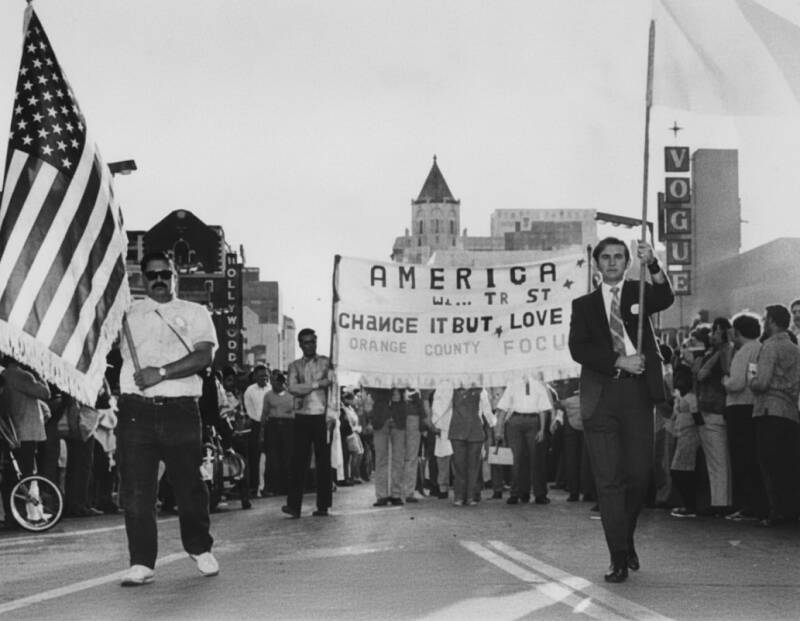
The parade was held to mark the first anniversary of the Stonewall uprising, the June 1969 clash between patrons of New York City's Stonewall Inn and police that sparked the modern gay rights movement. While Stonewall is now a symbol of LGBTQ+ liberation, many are surprised to learn that the world’s first legally permitted Pride parade was not in New York, but in Hollywood.
A group of activists led by Morris Kight, Bob Humphries, and Reverend Troy Perry, who founded the Metropolitan Community Church, organized the event. They created Christopher Street West, named after the street where the Stonewall Inn was located. Their goal was simple but bold: to bring gay people into public view. In 1970, this was a radical idea.
At that time, California still had laws against homosexual conduct. Police often raided gay bars. Newspapers used language that would be shocking today. Simply being openly gay could cost someone their job, home, family, or safety. Most gay people in Los Angeles lived double lives, and many had never joined a public gathering of openly gay people.
The organizers planned a parade moving east along Hollywood Boulevard from McCadden Place to Vine Street. They hoped for floats, bands, banners, and thousands of people celebrating Stonewall and gay identity. Instead, they faced strong resistance from City Hall.
Los Angeles Police Chief Ed Davis and the Police Commission would not grant the permit under normal conditions. They required organizers to buy a $1.5 million liability insurance policy and pay a $1,500 bond for police protection. Officials said these demands were needed because the parade might provoke violence from onlookers.
This reasoning was telling. Instead of protecting people using their constitutional rights, the city tried to punish them financially because others might react with violence.
The American Civil Liberties Union soon got involved. Attorney Herbert Selwyn argued that the parade’s conditions violated basic constitutional rights like free speech, assembly, and petition. The case went to Superior Court, where Judge Richard Schauer made a landmark decision. He rejected the city’s arguments and ordered officials to issue the permit. The court recognized what seems obvious now but was groundbreaking in 1970: gay citizens had the same constitutional rights as everyone.

Reverend Troy Perry and Reverend Bob Humphries, June 1970
Newspapers in Los Angeles closely covered the fight. Headlines called it a "Homosexual Parade Battle" and a "Gay Parade Permit Fight." Some articles were sympathetic, while others showed the prejudices of the time. Still, the publicity mattered. For perhaps the first time, homosexuality was discussed publicly as a civil rights issue, not just as a crime or medical problem.
After winning the permit, organizers quickly prepared for the march. They built floats, painted banners, and welcomed participants from across California. Civil liberties groups also offered support. What started as a fight for a permit became a declaration of existence.
At 7 p.m. on June 28, marchers gathered near McCadden Place and Hollywood Boulevard. Estimates say about 1,000 to 2,000 people took part in the parade. Huge crowds lined the sidewalks. Some reports said up to 50,000 people watched parts of the event, though the exact number is still debated.
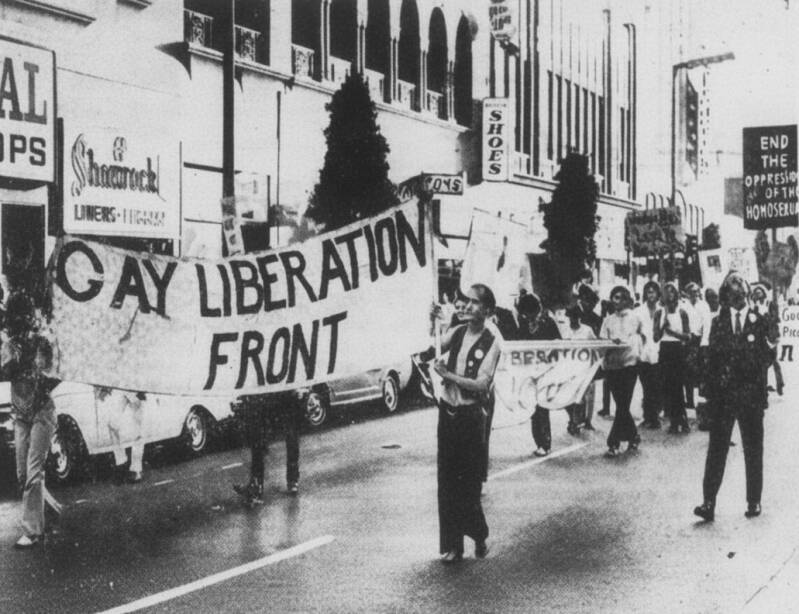
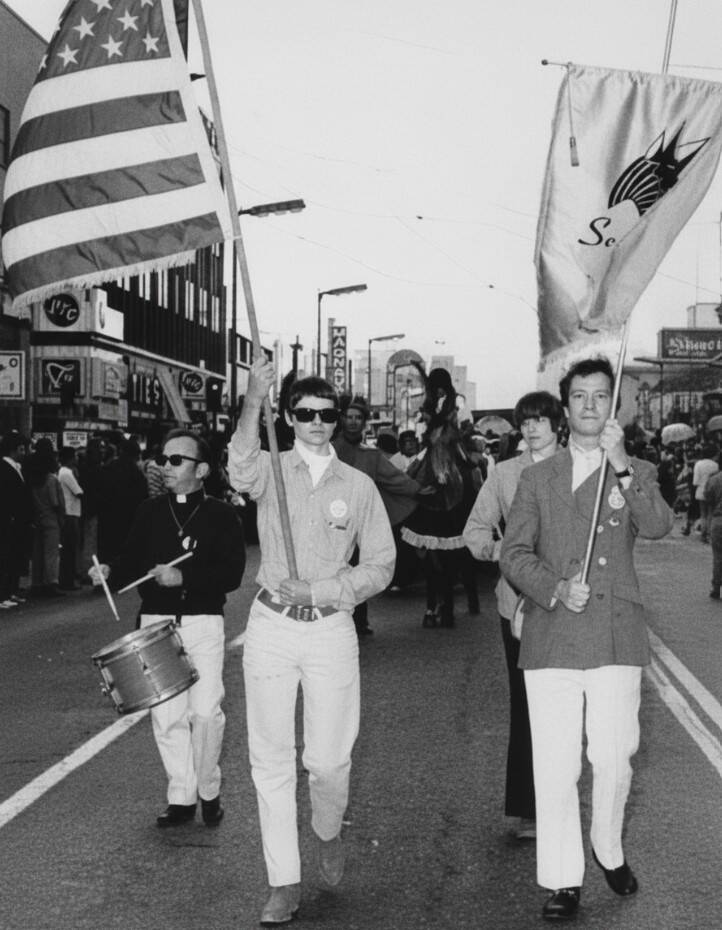
For the marchers, the experience changed them. Many had never seen so many openly gay people together before. Some marched even though they risked losing jobs or family if recognized. Some wore costumes, others carried signs for equality, and many just walked. Looking at old photos, what stands out is not showiness but courage. Most were ordinary people taking big risks.
The mood was both celebratory and tense. Spectators cheered, applauded, whistled, and watched with curiosity. There were also catcalls and insults. But the violence police had predicted never happened. The parade went on peacefully, showing that many of the fears used to oppose it were exaggerated or unfounded.
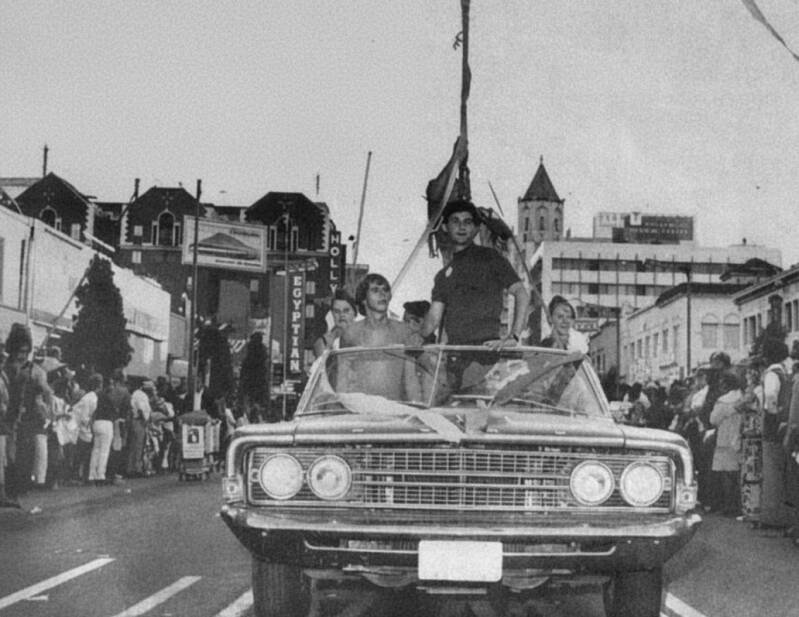
Rev. Troy Perry later called the event a public affirmation of humanity. Organizers stressed that the parade was about visibility, not just celebration. As Perry told reporters, homosexuals deserved the same rights, including the right to walk the streets, as everyone else.
One incident after the parade showed how much work remained. Hundreds of participants held a sidewalk sit-in near Hollywood and Las Palmas. Police broke up the crowd and arrested several people, including Perry. Even after their victory, confrontation was still part of the struggle.
Still, the larger meaning of the day was clear. For the first time, LGBTQ+ people had challenged government discrimination, won in court, and marched openly through a major American city. This event set a model that Pride celebrations around the world would later follow.
The parade came back to Hollywood Boulevard each year. But tensions with the Los Angeles Police Department and city officials continued. Organizers often complained about poor cooperation, reluctance to close streets, and little real support. As attendance grew in the 1970s, many activists started looking for a more welcoming place. They found it a few miles to the west.
By the late 1970s, organizers moved the event to West Hollywood, an unincorporated area. West Hollywood was already a major center of gay life in Southern California and had a more welcoming political climate. Since it was run by Los Angeles County, not the city, organizers found officials more helpful. The parade officially moved in 1979 to Santa Monica Boulevard. This move helped make West Hollywood one of the world’s most important LGBTQ+ communities. Still, it’s important to remember where it all started: on Hollywood Boulevard.

Today, visitors at the southwest corner of Hollywood Boulevard and McCadden Place can see a marker honoring the site of the nation’s first legally permitted Pride parade. Thousands walk by every day without knowing the importance of that spot. But on June 28, 1970, that pavement became a landmark in LGBTQ+ civil rights history.
The people who marched there were not celebrities or politicians. Many were ordinary people whose names are now forgotten. What they had was the courage to be seen when that carried real risks. They walked not knowing if they would be cheered or attacked, welcomed or rejected.
Fifty-six years later, Pride celebrations are annual traditions. Corporate sponsors, politicians, and television cameras now fill parades that attract hundreds of thousands. The Hollywood march in 1970 was different. It was smaller, riskier, and much less certain. That’s exactly what makes it so special.
Before rainbow crosswalks, marriage equality, elected LGBTQ+ officials, or Pride as a celebration, there was a group of determined activists on Hollywood Boulevard asking for something much simpler: the right to exist in public.
Photo Credits: The Advocate; Mother Boats C.P. (Brian Traynor).
If you enjoyed my latest feature on the history of Los Angeles' first Gay Pride Parade, please take a moment to comment on, rate, and share the article as we remember the courageous pioneers who marched down Hollywood Boulevard in 1970 and helped change history.
Add comment
Comments
As a 17 year old I galivanted throughout the crowds trying to take it all in.. then found a flyer for the GLF celebration later in Silverlake--Was one wild day------
Thanks Rick, for sharing those memories from 1970.