

There are certain actors I will watch in almost anything. Allison Janney is one of them. Frankly, I would watch her read the proverbial phone book and probably come away entertained. She possesses that increasingly rare quality among actors: the ability to make even ordinary dialogue sound like something worth listening to. Fortunately, Miss You, Love You, HBO/Max's intimate new drama written and directed by Jim Rash, gives her far more to work with than a phone book. It gives her grief, anger, regret, loneliness, and a mountain of dialogue, and Janney makes every moment count.
Reviewed by Allan R. Ellenberger
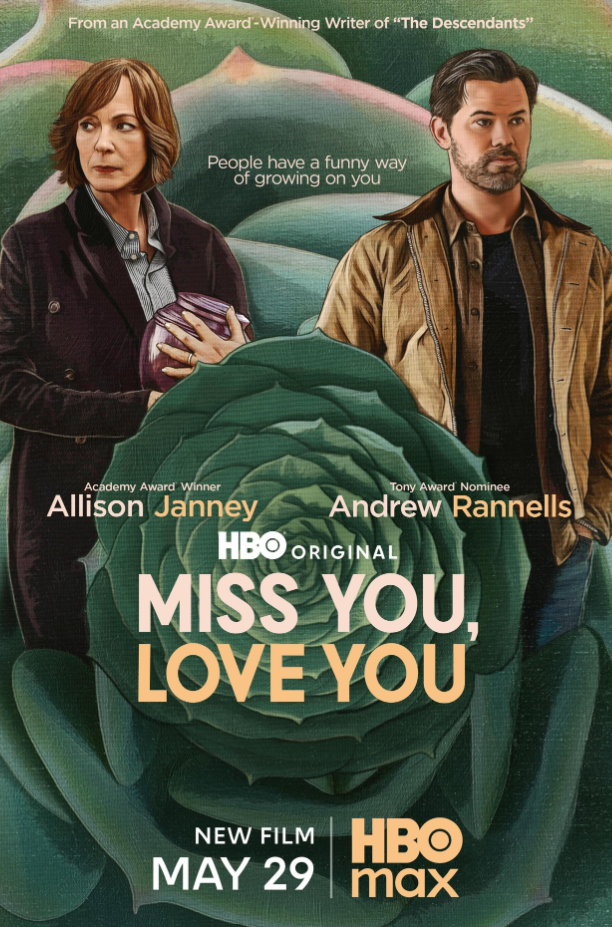
The film opens with a deceptively simple premise. Diane Patterson (Janney) is a recently widowed woman living in rural New Mexico, preparing for the funeral of her husband, Henry. Her son Tyler, who cannot—or will not—return home, sends his personal assistant Jamie (Andrew Rannells) to help her navigate the arrangements. Tyler never appears on screen. Instead, he exists through text messages, phone alerts, and the reactions of the two people left behind to argue about him. It is a clever device that allows Tyler to become the emotional center of the story while remaining physically absent.
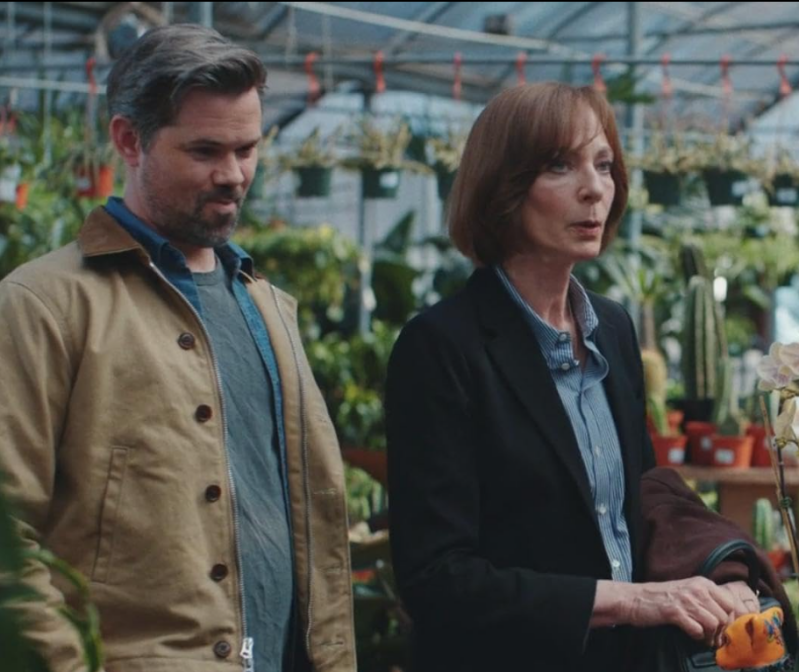
What surprised me most was how much the film resembles a stage play. That isn't a criticism. In fact, it's one of the movie's greatest strengths. Jim Rash originally conceived the story as a play, and you can feel those theatrical roots in nearly every scene. The film is largely built around Janney and Rannells talking, arguing, probing, revealing, and occasionally wounding one another with words. There are supporting appearances from Bonnie Hunt, Oscar Nuñez, and Suzy Nakamura, but for most of its running time, this is essentially a two-person acting duel. Fortunately, Janney and Rannells are more than capable of carrying the weight.
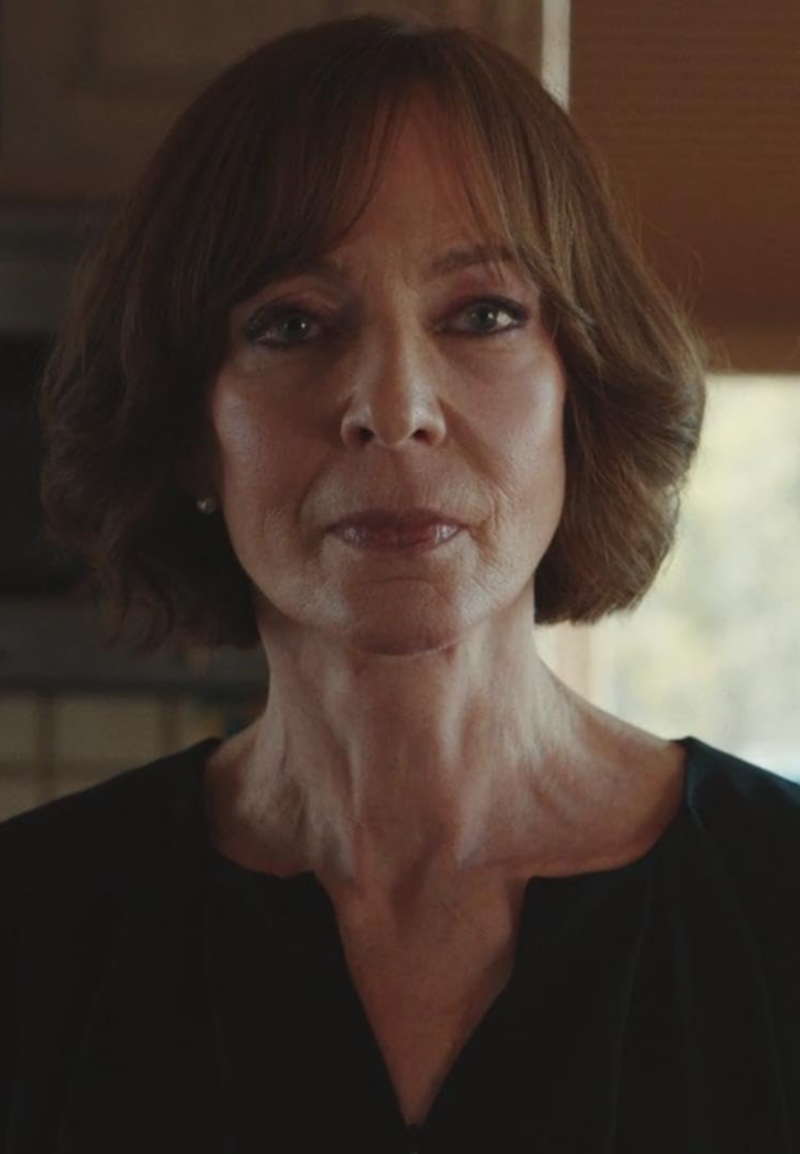
Janney is magnificent. She has played sharp-tongued, intimidating women before, but Diane feels different. Beneath the sarcasm and irritation is a woman whose entire emotional foundation has collapsed. One moment, she is lashing out at Jamie for breathing too loudly; the next, she is quietly revealing years of disappointment and heartbreak. Janney finds humor in Diane's bitterness without ever turning her into a caricature. Critics have rightly singled her out for praise, with several reviewers calling it her finest work in years. After watching the film, it is difficult to argue against it.
Andrew Rannells matches her beautifully. That is no small accomplishment. Many actors would disappear beside a performer as commanding as Janney, but Rannells brings warmth, intelligence, and just enough nervous energy to keep Jamie from becoming merely a sounding board. He gradually reveals that Jamie is dealing with his own disappointments and emotional wounds. The result is a relationship that evolves in unexpected ways. Sometimes they seem like enemies. Sometimes they seem like mother and son. Sometimes they seem like two lonely people who simply need someone willing to listen.

The screenplay is dialogue-heavy, and I mean that as a compliment. In an era when so many films are terrified of conversation, Miss You, Love You embraces it. The movie understands that two talented actors sitting in a room talking can be more compelling than a hundred million dollars' worth of visual effects. The exchanges are funny, painful, and often surprisingly insightful. Rash's script is packed with observations about grief, communication, and the strange ways families manage to love and hurt one another simultaneously.
Not everyone has been equally enthusiastic. Some critics noted that the film's theatrical structure occasionally makes it feel like a filmed stage production, and a few found its emotional revelations somewhat calculated. Others argued that its familiar themes and limited setting keep it from reaching true greatness. Those criticisms are fair. There are moments when you can see the screenplay carefully positioning its emotional breakthroughs. Yet even when the mechanics become visible, the performances keep the material grounded and believable.

Audience reactions have generally been stronger than the reservations expressed by some reviewers. Many viewers have connected with the film's honest portrayal of grief and family estrangement, particularly the painful reality of a child who remains emotionally distant even while trying to help from afar. The movie's modest scale appears to be part of its appeal. Rather than chasing grand revelations, it focuses on small human moments that feel recognizable and true.
What stayed with me most after the credits rolled was Tyler's absence. We never see him. We never hear his voice. Yet his presence hangs over every scene. Diane and Jamie, both love him, resent him, defend him, and criticize him. Through their conversations, Tyler becomes more real than many fully developed characters in other films. That is an impressive piece of storytelling.
Miss You, Love You is not flashy. It is not trying to launch a franchise or dominate social media for a weekend. It is a quiet, character-driven drama about loss, forgiveness, and the complicated business of being a family. Those films are becoming increasingly rare, which makes this one all the more valuable. And if you're an Allison Janney fan, as I most certainly am, it's practically required viewing.
Rating: 5 out of 5 stars
Join us tomorrow at The Hollywoodland Revue for a look at a new book Steve Cochran: Bad Boy of Hollywood, one of Hollywood's most fascinating and enigmatic leading men whose life proved every bit as dramatic as the roles he played on screen.
If you enjoyed my review of Miss You, Love You, please leave a comment, rate the article, and share it with fellow film lovers—your support helps The Hollywoodland Revue continue celebrating great performances and thoughtful storytelling.
Add comment
Comments